Prickly Pear
Description
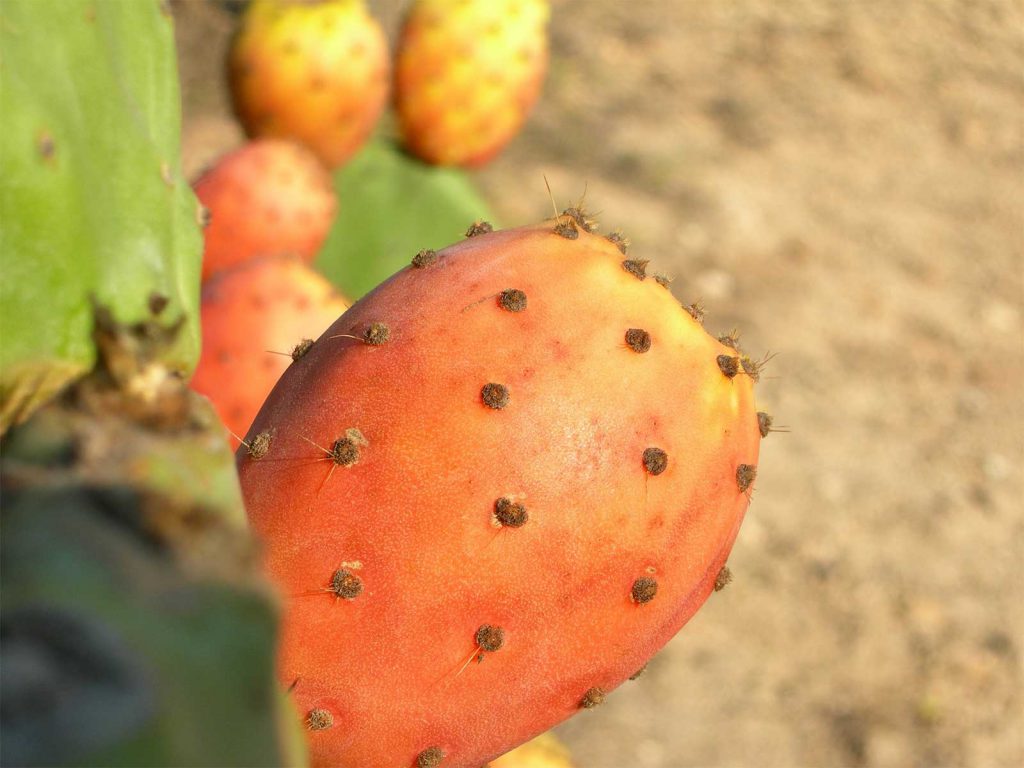
Opuntia, commonly called prickly pear or pear cactus, is a genus of flowering plants in the cactus family Cactaceae. Prickly pears are also known as tuna (fruit), sabra, nopal (paddle, plural nopales) from the Nahuatl word nōpalli for the pads, or nestle, from the Nahuatl word nōchtli for the fruit; or paddle cactus. The genus is named for the Ancient Greek city of Opus, where, according to Theophrastus, an edible plant grew and could be propagated by rooting its leaves. The most common culinary species is the Indian fig opuntia (O. ficus-indica).
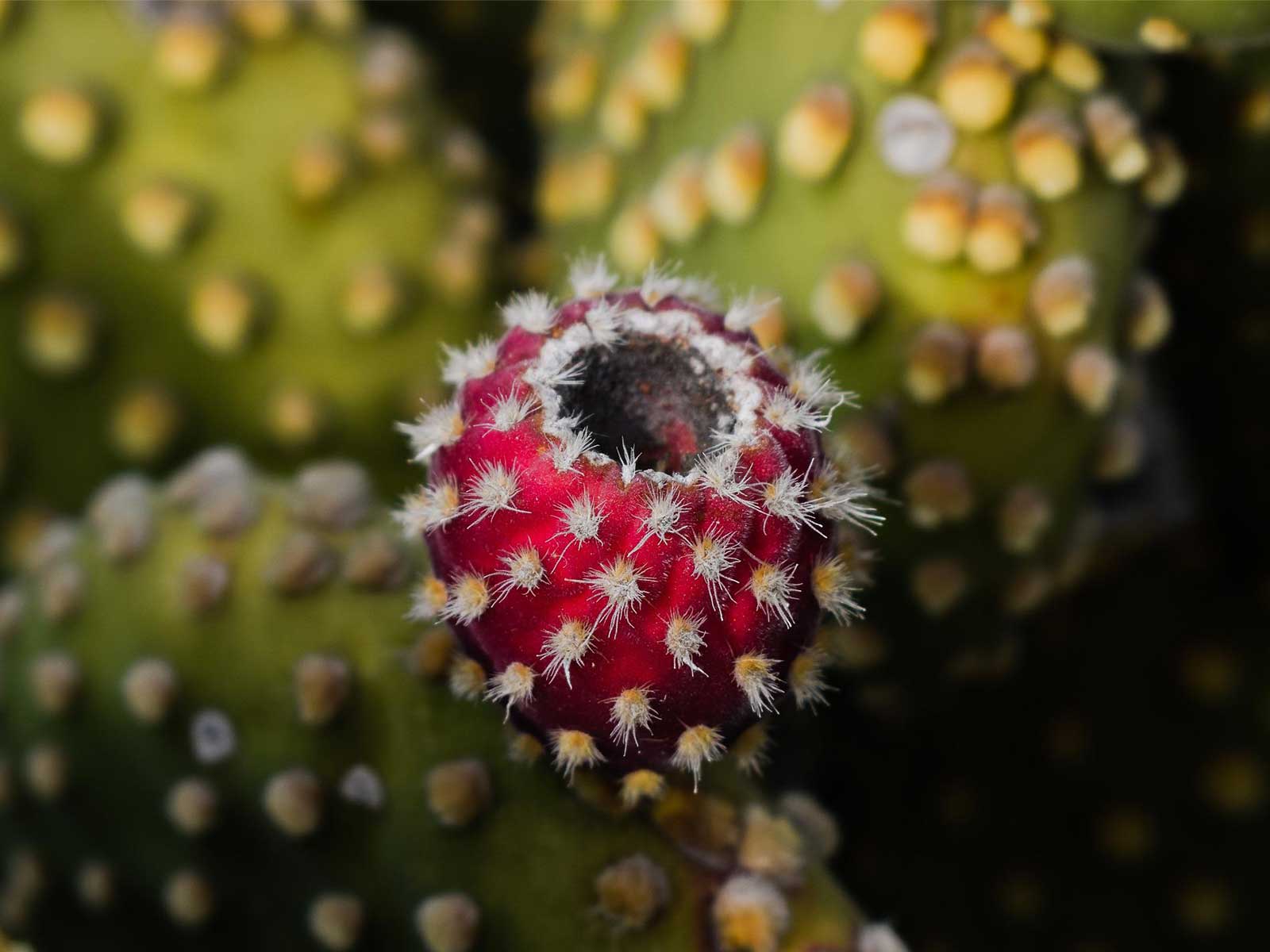
O. ficus-indica is a large, trunk-forming, segmented cactus that may grow to 5–7 meters (16–23 feet) with a crown of over 3 m (10 ft) in diameter and a trunk diameter of 1 m (1 yard). Cladodes (large pads) are green to blue-green, bearing few spines up to 2.5 centimeters (1 inch) or maybe spineless. Prickly pears typically grow with flat, rounded cladodes (also called platyclades) containing large, smooth, fixed spines and small, hairlike prickles called glochids that readily adhere to skin or hair, then detach from the plant. Placentation is parietal, and the fruit is a berry with arillate seeds. Prickly pear species can vary greatly in habit; most are shrubs, but some, such as Opuntia Galapagos of the Galápagos, are trees.
The flowers are typically large, axillary, solitary, bisexual, and epiperigynous, with a perianth consisting of distinct, spirally arranged tepals and a hypanthium. The stamens are numerous and in a spiral or whorled clusters, and the gynoecium has numerous inferior ovaries per carpel.
Chemistry
Opuntia contains a range of phytochemicals in variable quantities, such as polyphenols, dietary minerals, and betalains. Identified compounds under basic research include gallic acid, vanillic acid, and catechins, as examples. The Sicilian prickly pear contains betalain, betanin, and indicaxanthin, with the highest levels in their fruits.