Sand Dollar Cactus
Description
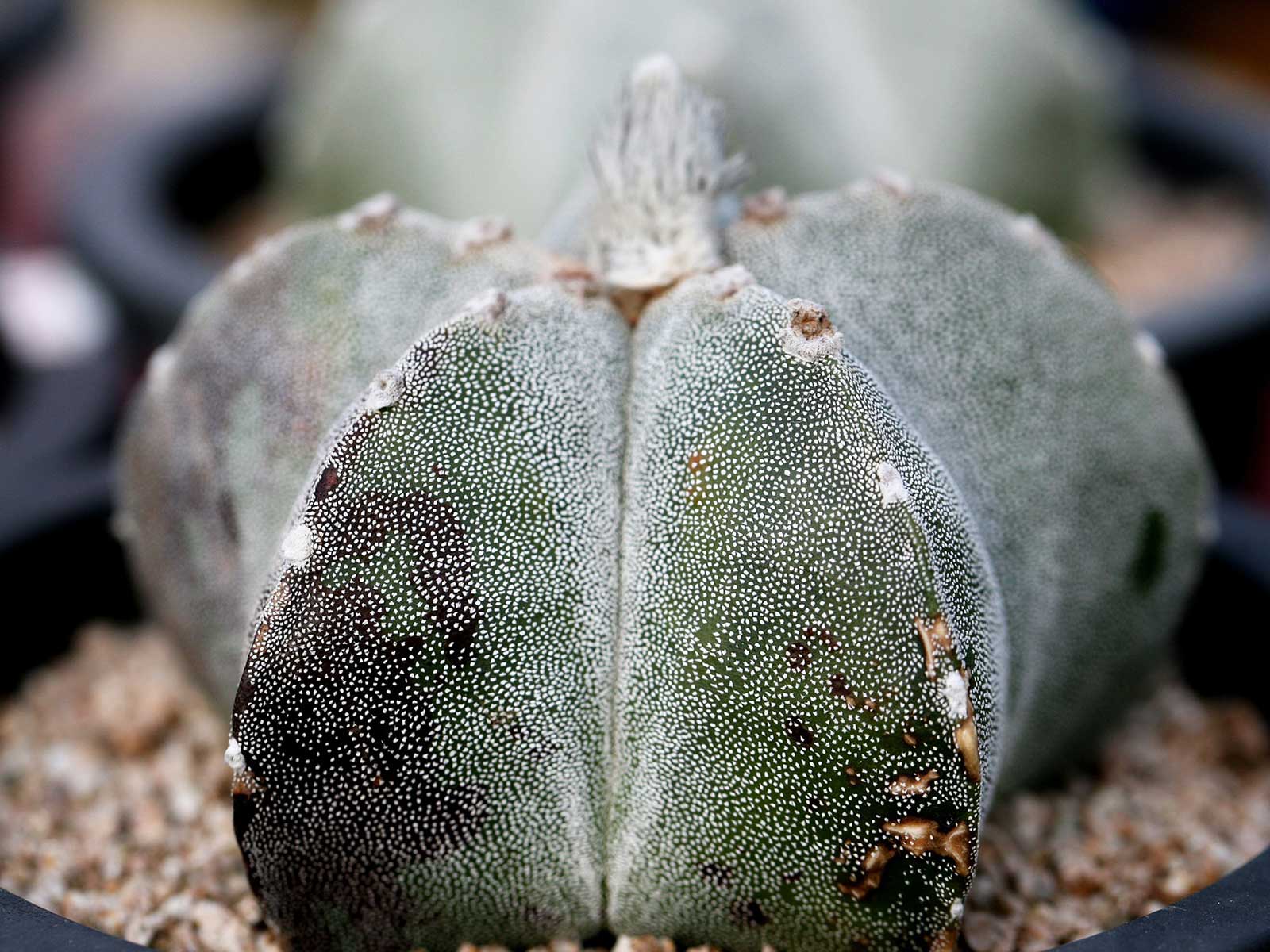
A. asterias (also known as the Star Cactus) is small, round, spineless, and squat, reaching a height of 2.5–6 cm (0.98–2.36 in) and a diameter of 5–15 cm (2.0–5.9 in). The disc-shaped body is divided into 7–10 sections, known as ribs; in the middle of each rib, there are woolly areoles. The body is a greenish-brown color and may appear speckled from its covering of white scales (trichomes).[6] The flowers of this cactus are yellow with red bases and the outer parts are very woolly. Green to pink oval fruits are produced; the outside coat is covered with woolly hairs.
Reproduction takes place via sexual outcrossing through cross-pollination; star cacti reach sexual maturity after a few years when they have attained 2–3 centimeters (0.79–1.18 in) in diameter. Flowers are produced from March to June (the summer season in its native habitat) and fruiting occurs from April to June. The primary pollinators of A. asterias are medium to large size bees with one species, Diadasia Rincon being the most effective. The plant also bears an extremely close resemblance to the relatively unrelated Euphorbia obesa, which, although being a succulent, is not a cactus.
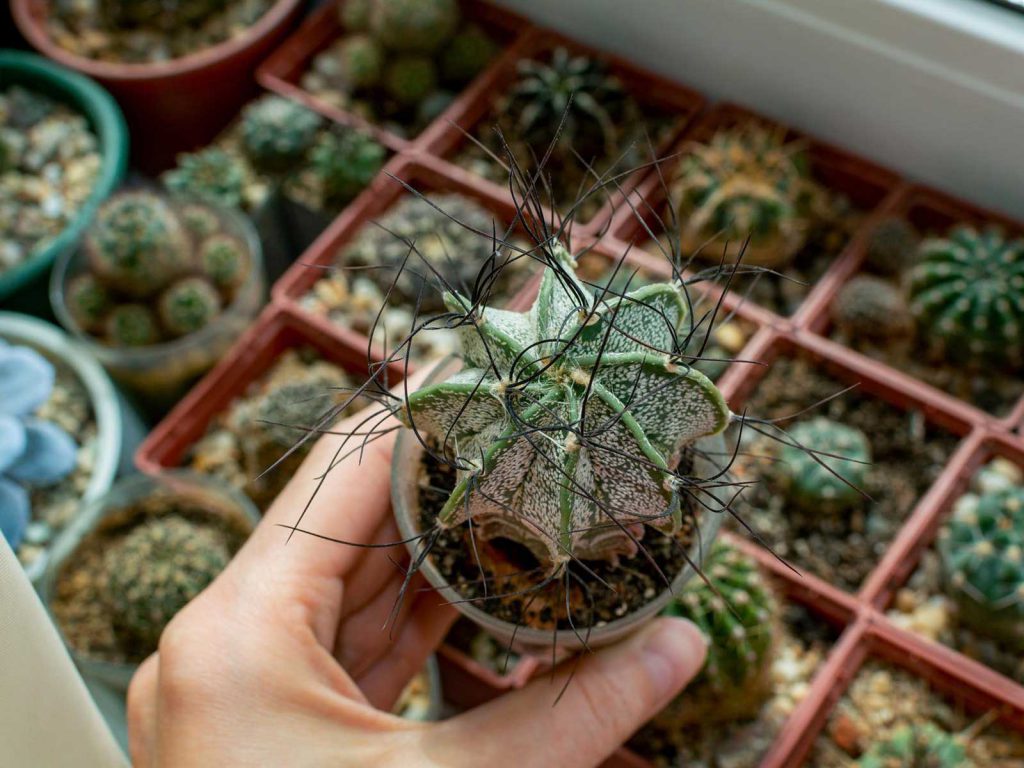
The United States Fish and Wildlife Service has drafted a Recovery Plan in an attempt to secure the future of this species. The Recovery Plan highlights the need to protect existing populations, carry out research into possible new populations, and develop a formal conservation agreement between the United States and Mexico.
Cultivation
Sand Dollar Cactus has been grown as a houseplant since the 1840s, like other members of its genus and despite its rarity in the wild. It is readily propagated from seed, so most plants encountered in nurseries are seed grown. The popularity of this species among collectors and enthusiasts has ensured that a number of cultivars are available. One such cultivar is the ‘Super Kabuto’, a clonally propagated variety whose large trichomes congregate into dense spots, arranged in a striking pattern.